
Die Landschaft der React-Entwicklung hat ihre bedeutendste Transformation seit der Einführung von Hooks im Jahr 2018 erfahren. Während wir uns durch das Jahr 2025 und in das Jahr 2026 bewegen, sind React Server Components (RSC) von einer experimentellen Architektur zum Industriestandard für den Bau hochperformanter Full-Stack-Anwendungen gereift. Mit der Stabilisierung von React 19 und der breiten Akzeptanz von Frameworks wie Next.js 15+, React Router 7 und TanStack Start ist das "Server-First"-Mindset nicht länger optional – es ist die Basis.
React Server Components stellen einen Paradigmenwechsel dar, bei dem Server und Client in einer einheitlichen, nahtlosen Schleife zusammenarbeiten. Indem wir das Data Fetching und komplexe Logik auf den Server verlagern, reduzieren wir die JavaScript-Bundle-Größe, die an den Browser gesendet wird, verbessern die Core Web Vitals und vereinfachen die Developer Experience, da komplexe API-Layer für initiale Datenladevorgänge entfallen.
Dieser Leitfaden untersucht die Best Practices für RSCs im Ökosystem 2025–2026 und deckt alles von Architekturmustern bis hin zu Performance-Optimierung und Sicherheit ab.
Das moderne RSC-Architektur-Mindset
In der aktuellen Ära der React-Entwicklung ist der wichtigste Wandel der Übergang zu einer "Server-First"-Architektur. In früheren Versionen von React war jede Komponente standardmäßig eine Client Component. Heute ist das Gegenteil der Fall.
Das Server-First-Default-Prinzip
Sie sollten alle Komponenten standardmäßig als Server Components behandeln. Dieser Ansatz stellt sicher, dass der Großteil Ihrer Anwendungslogik auf dem Server bleibt, näher an Ihren Datenquellen. Sie sollten sich nur dann für Client Components entscheiden, wenn Sie die "use client"-Direktive an den "Blättern" Ihres Komponentenbaums verwenden – also an den spezifischen Punkten, an denen Interaktivität, Browser-APIs oder stateful Hooks zwingend erforderlich sind.
Warum das wichtig ist:
- Reduzierte Bundle-Größe: Code, der nur in Server Components verwendet wird, wird niemals an den Client gesendet.
- Erhöhte Sicherheit: Sensible Logik und API-Keys bleiben auf dem Server.
- Schnellerer FCP: HTML wird auf dem Server generiert und sofort an den Client gestreamt.
Der React Compiler (Standardisiert)
Bis 2026 ist der React Compiler zu einem Standardbestandteil der Build-Pipeline geworden. Historisch gesehen verbrachten Entwickler viel Zeit damit, Re-Renders mit useMemo, useCallback und React.memo zu verwalten. Der React Compiler automatisiert diesen Prozess, indem er Ihren Code analysiert und während des Build-Schritts eine feingranulare Memoization anwendet.
Best Practice bedeutet heute, "reines" JavaScript zu schreiben. Vermeiden Sie manuelle Memoization, es sei denn, Sie arbeiten an einer Legacy-Codebase. Der Compiler stellt sicher, dass Ihre Client Components so performant wie möglich sind, ohne den kognitiven Overhead von Dependency-Arrays.
Nutzung der use API
Die use API hat useEffect für viele Data-Fetching-Szenarien effektiv ersetzt. Im Gegensatz zu traditionellen Hooks kann use bedingt oder innerhalb von Schleifen aufgerufen werden (sofern die zugrunde liegende Ressource korrekt verwaltet wird). Sie ermöglicht es Ihnen, ein Promise oder einen Context direkt während der Render-Phase zu lesen.
// Ein Promise in einer Client Component mit 'use' lesen
import { use } from 'react';

function UserProfile({ userPromise }: { userPromise: Promise<User> }) {
  const user = use(userPromise); // Entpackt das Promise

  return <div>{user.name}</div>;
}
Diese API vereinfacht die Integration zwischen Server Components (die Daten abrufen) und Client Components (die sie anzeigen) und ermöglicht einen flüssigeren Datenfluss ohne den typischen "Loading-State"-Boilerplate von useState und useEffect.
Verwaltung der Client-Server-Grenze
Die Grenze zwischen Server und Client ist der kritischste Teil einer RSC-Anwendung. Zu verstehen, wie Daten und Komponenten diese Linie überschreiten, ist essenziell für den Bau stabiler Anwendungen.
Die Serialisierungs-Grenze (Serialization Boundary)
Wenn Sie Daten von einer Server Component an eine Client Component übergeben, müssen diese Daten serialisierbar sein. Das bedeutet, sie müssen in ein JSON-ähnliches Format konvertierbar sein, das über das Netzwerk gesendet werden kann.
Best Practices für die Serialisierung:
- Funktionen vermeiden: Sie können keine Funktionen als Props an Client Components von einer Server Component aus übergeben (außer es handelt sich um Server Actions).
- Date-Objekte: Obwohl einige Frameworks mittlerweile
Date-Objekte unterstützen, ist es immer noch am sichersten, Daten in ISO-Strings umzuwandeln. - Klassen-Instanzen: Vermeiden Sie die Übergabe von Instanzen von Klassen (wie ein Prisma-Modell mit Methoden). Bereinigen Sie die Daten stattdessen zu einem einfachen Objekt.
// Server Component
async function ProductPage({ id }: { id: string }) {
  const product = await db.product.findUnique({ where: { id } });

  // SCHLECHT: Das rohe Objekt zu übergeben könnte nicht-serialisierbare Methoden enthalten
  // GUT: Nur das auswählen, was der Client benötigt
  const clientData = {
    name: product.name,
    price: product.price.toString(), // Sicherstellen, dass Zahlen/Dezimalwerte verarbeitet werden
    description: product.description,
  };

  return <ProductCard data={clientData} />;
}
Das Composition Pattern (Das "Donut-Pattern")
Eine häufige Herausforderung besteht darin, eine Server Component innerhalb einer Client Component rendern zu müssen. Wenn Sie eine Server Component in eine Datei importieren, die mit "use client" markiert ist, wird diese Server Component "vergiftet" (poisoned) und in eine Client Component umgewandelt, wodurch alle serverseitigen Vorteile verloren gehen.
Um dies zu lösen, verwenden Sie das Composition Pattern (oft als Donut-Pattern bezeichnet). Übergeben Sie die Server Component als children-Prop an die Client Component.
// ClientLayout.tsx ("use client")
export default function ClientLayout({ children }: { children: React.ReactNode }) {
  const [isOpen, setIsOpen] = useState(false);
  return (
    <div className={isOpen ? 'open' : 'closed'}>
      <button onClick={() => setIsOpen(!isOpen)}>Toggle</button>
      {children} {/* Server Components können hier leben! */}
    </div>
  );
}

// Page.tsx (Server Component)
export default function Page() {
  return (
    <ClientLayout>
      <ServerDataComponent /> {/* Dies bleibt eine Server Component */}
    </ClientLayout>
  );
}
Server Actions für Mutationen
Server Actions ("use server") haben die Notwendigkeit für manuellen API-Route-Boilerplate (GET/POST/PUT/DELETE) ersetzt. Es handelt sich um asynchrone Funktionen, die auf dem Server laufen, aber direkt aus Client Components wie lokale Funktionen aufgerufen werden können.
Best Practice: Verwenden Sie Server Actions für alle Datenmutationen. Sie lassen sich perfekt in das HTML-<form>-Element integrieren und ermöglichen "Progressive Enhancement" – was bedeutet, dass Ihre Formulare funktionieren können, noch bevor das clientseitige JavaScript vollständig geladen ist.
Performance-Optimierung mit Streaming und Suspense
Im Jahr 2026 erwarten Benutzer verzögerungsfreie Interaktionen. RSCs bieten zwei leistungsstarke Werkzeuge, um dies zu erreichen: Partial Pre-rendering (PPR) und Streaming.
Paralleles Data Fetching
Ein häufiger Fehler in der RSC-Entwicklung ist das Erzeugen von "Wasserfällen" (Waterfalls) – wobei ein Datenabruf auf den Abschluss eines anderen wartet, selbst wenn diese nicht voneinander abhängen.
Der Wasserfall (Schlecht):
const user = await getUser(); // Dauert 1s
const posts = await getPosts(user.id); // Dauert 1s
// Gesamt: 2s
Paralleles Fetching (Gut):
// Beide Promises gleichzeitig initiieren
const userPromise = getUser();
const postsPromise = getPosts();

// Auf die Auflösung beider warten
const [user, posts] = await Promise.all([userPromise, postsPromise]);
// Gesamt: ~1s
Partial Pre-rendering (PPR)
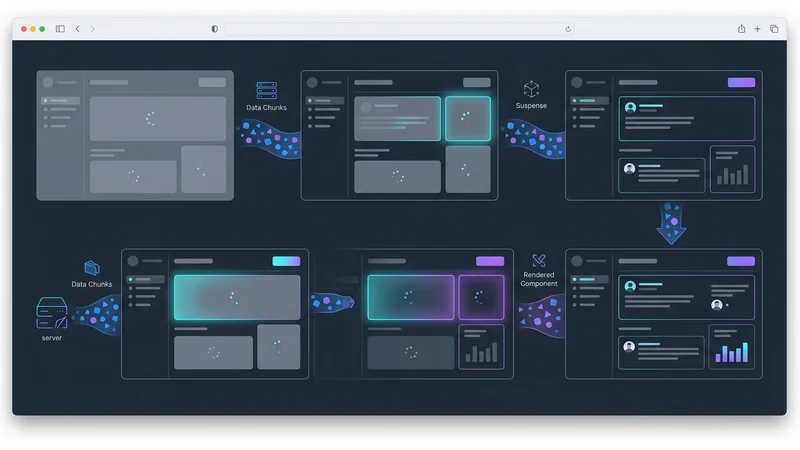
PPR ist ein bahnbrechendes Feature in Frameworks wie Next.js 15. Es ermöglicht Ihnen, eine statische "Hülle" einer Seite (Navigation, Layout, Sidebars) zur Build-Zeit vorzurendern, während "Löcher" für dynamische Inhalte gelassen werden. Wenn ein Benutzer die Seite besucht, wird die statische Hülle sofort von einem CDN ausgeliefert, und die dynamischen Server Components werden via Suspense in die Löcher gestreamt, sobald sie bereit sind.
Streaming mit Suspense
Streaming erlaubt es dem Server, das UI in Stücken (Chunks) an den Client zu senden. Anstatt darauf zu warten, dass alle Daten der Seite abgerufen wurden, können Sie Ladezustände für spezifische Teile der Seite anzeigen.
import { Suspense } from 'react';

export default function Dashboard() {
  return (
    <main>
      <h1>Dashboard</h1>
      <Suspense fallback={<Skeleton />}>
        <SlowAnalyticsComponent />
      </Suspense>
      <Suspense fallback={<Skeleton />}>
        <RecentOrdersComponent />
      </Suspense>
    </main>
  );
}
Dieser Ansatz verbessert den Largest Contentful Paint (LCP) und den Cumulative Layout Shift (CLS) erheblich, da der Benutzer sieht, wie Inhalte erscheinen, sobald sie verfügbar sind, anstatt auf einen leeren Bildschirm zu starren.
Sicherheit und Umgang mit sensiblen Daten
Mit der Möglichkeit, Datenbankabfragen direkt in Ihren Komponenten zu schreiben, ist Sicherheit wichtiger denn je. RSCs bieten inhärente Sicherheitsvorteile, aber nur, wenn sie korrekt eingesetzt werden.
Rollenbasierte Zugriffskontrolle (RBAC)
Da Server Components nur auf dem Server laufen, können Sie Berechtigungsprüfungen direkt in der Render-Funktion durchführen. Diese Logik wird niemals im clientseitigen Bundle exponiert, was es für einen Benutzer unmöglich macht, Ihre Autorisierungslogik über die Entwicklertools des Browsers einzusehen.
// Sicherheit innerhalb der Server Component
async function AdminPanel() {
  const session = await getSession();

  if (!session || session.user.role !== 'ADMIN') {
    return <div>Zugriff verweigert</div>;
  }

  const sensitiveData = await db.adminStats.findMany();
  return <StatsTable data={sensitiveData} />;
}
Schutz von Datenbankverbindungen
Eine große Falle in RSC ist die "Erschöpfung der Datenbankverbindungen" (Database Connection Exhaustion). Wenn Sie 50 Server Components auf einer Seite haben und jede eine neue Datenbankverbindung öffnet, wird Ihre Datenbank unter Last schnell abstürzen.
Best Practices:
- Singleton-Pattern: Stellen Sie sicher, dass Ihr Datenbank-Client (wie Prisma oder Drizzle) als Singleton instanziiert wird.
- React
cache(): Nutzen Sie die integriertecache()-Funktion von React, um Datenanfragen über einen einzelnen Render-Durchgang hinweg zu deduplizieren. Wenn mehrere Komponenten dieselben "Aktueller Benutzer"-Daten anfordern, stelltcache()sicher, dass die Datenbank nur einmal abgefragt wird. - Data Access Layer (DAL): Erstellen Sie einen dedizierten Ordner (z. B.
/lib/data) für Ihre Datenbankabfragen. Schreiben Sie keine rohen SQL- oder ORM-Aufrufe direkt in die Komponentendatei. Dies erleichtert die Sicherheitsüberprüfung und die Verwaltung des Cachings.
Häufige Fehler und wie man sie vermeidet
Sogar erfahrene Entwickler tappen in diese Fallen, wenn sie auf eine Server-Component-Architektur umsteigen.
1. Client Component Poisoning
Dies passiert, wenn Sie eine "use client"-Direktive zu weit oben im Komponentenbaum platzieren. Wenn Sie sie beispielsweise in Ihr Root-layout.tsx setzen, wird Ihre gesamte Anwendung als JavaScript gebündelt, was die Vorteile von RSC effektiv deaktiviert.
- Die Lösung: Halten Sie Client Components so klein wie möglich. Wenn nur ein Button einen State benötigt, machen Sie nur den Button zu einer Client Component.
2. Metadata Blocking
In Frameworks wie Next.js wird die generateMetadata-Funktion für SEO verwendet. Wenn Sie einen langsamen Datenbank-Fetch innerhalb von generateMetadata durchführen, kann dies das Streaming der gesamten Seite blockieren, da der Server den <head> fertigstellen muss, bevor er den <body> senden kann.
- Die Lösung: Rufen Sie nur das absolute Minimum an Daten ab, das für SEO erforderlich ist (wie einen Seitentitel oder eine ID), und verwenden Sie
Suspensefür den Hauptinhalt.
3. Hydration Mismatches
Ein Hydration Mismatch tritt auf, wenn das auf dem Server generierte HTML nicht mit dem ersten Render auf dem Client übereinstimmt. Dies passiert oft bei der Verwendung von Browser-only-APIs wie window.innerWidth oder localStorage innerhalb einer Komponente, die serverseitig gerendert wird.
- Die Lösung: Verwenden Sie
useEffectfür browser-spezifische Logik, dauseEffectnur auf dem Client läuft. Alternativ können Sie einen "No SSR"-Wrapper für spezifische Komponenten nutzen.
// Hydration Mismatch vermeiden
const [isClient, setIsClient] = useState(false);

useEffect(() => {
  setIsClient(true);
}, []);

if (!isClient) return <LoadingSkeleton />;
return <BrowserOnlyComponent />;
Der Tech-Stack 2026
Stand 2026 hat sich das Ökosystem um RSC gefestigt. Hier sind die Tools, die den modernen Stack definieren:
- Frameworks: Next.js 15/16 bleibt der Marktführer für Enterprise-Anwendungen. React Router 7 ist die erste Wahl für Vite-basierte Projekte und bietet einen leistungsstarken "Framework Mode" mit RSC-Unterstützung. TanStack Start ist der aufstrebende Stern und bietet unvergleichliche Typsicherheit über die Server-Client-Grenze hinweg.
- State Management: Zustand ist die bevorzugte Wahl für leichtgewichtigen clientseitigen State. Für die Synchronisierung von Serverdaten mit Client-Caches ist TanStack Query v5+ der Standard, jetzt mit Hooks, die speziell für die Arbeit mit RSC-gefetchten Daten entwickelt wurden.
- Styling: Tailwind CSS v4 ist auf eine Rust-basierte Engine umgestiegen und damit schneller als je zuvor. In Kombination mit Shadcn UI (v2), das nun vollständig für RSC optimiert ist, können Entwickler ansprechende Interfaces mit minimalem clientseitigem CSS-Overhead bauen.
- Datenbank: Drizzle ORM hat gegenüber Prisma massiv an Popularität gewonnen, dank seines "TypeScript-first"-Ansatzes und nahezu null Overhead, was kritisch für Serverless-Umgebungen ist, in denen RSCs oft bereitgestellt werden.
Häufig gestellte Fragen (FAQ)
Was ist der Unterschied zwischen React Server Components und SSR?
Server-Side Rendering (SSR) ist eine Technik zur Generierung von HTML auf dem Server, um die initiale Ladegeschwindigkeit zu verbessern, erfordert aber dennoch, dass die gesamte Komponente auf dem Client "hydriert". React Server Components (RSC) sind ein neuer Komponententyp, der nur auf dem Server läuft und niemals hydriert, was signifikant kleinere JavaScript-Bundles ermöglicht.
Kann ich React Hooks wie useState in Server Components verwenden?
Nein, Sie können Hooks wie useState, useReducer oder useEffect nicht in Server Components verwenden, da diese clientseitige Interaktivität und den Event-Loop des Browsers erfordern. Wenn Ihre Komponente State oder Seiteneffekte benötigt, müssen Sie sie mit der "use client"-Direktive markieren.
Wie übergebe ich Daten von einer Server Component an eine Client Component?
Sie übergeben Daten über Standard-Props, aber die Daten müssen serialisierbar sein (JSON-ähnlich). Sie können keine Funktionen, Klasseninstanzen oder komplexe Objekte mit Methoden über die Grenze hinweg übergeben; verwenden Sie stattdessen einfache Objekte, Strings, Zahlen oder Server Actions.
Warum sind React Server Components so eng an Next.js gekoppelt?
Obwohl RSC ein React-Feature ist, erfordert es eine tiefe Integration mit dem Bundler (wie Webpack oder Turbopack) und der Serverumgebung, um das Streaming und die Serialisierungs-Grenze zu handhaben. Next.js war der primäre Partner des React-Teams bei der Implementierung dieser komplexen architektonischen Anforderungen, obwohl andere Frameworks wie React Router 7 und TanStack Start dies mittlerweile ebenfalls unterstützen.
Was ist das 'Donut-Pattern' in React Server Components?
Das Donut-Pattern ist eine Kompositionstechnik, bei der eine Client Component (die Hülle) eine Server Component (das Loch) umschließt. Indem Sie die Server Component als children-Prop an die Client Component übergeben, bleibt die serverseitige Logik auf dem Server, während sie visuell in ein interaktives clientseitiges Layout eingebettet ist.
Fazit
React Server Components sind nicht länger die "Zukunft" von React – sie sind die Gegenwart. Durch die Übernahme eines Server-First-Mindsets, die Beherrschung der Serialisierungs-Grenze und die Nutzung moderner Tools wie dem React Compiler und Server Actions können Sie Webanwendungen erstellen, die schneller, sicherer und wartungsfreundlicher sind als je zuvor.
Der Übergang zu RSC erfordert ein Umdenken in Bezug auf Komponentenverantwortung und Datenfluss. Die Belohnungen – nahezu sofortige Seitenladevorgänge, drastisch reduzierte Bundle-Größen und ein vereinfachtes mentales Modell für das Data Fetching – machen es jedoch zum lohnendsten Weg, im Jahr 2026 für das Web zu entwickeln. Während Sie weiterbauen, denken Sie daran: Halten Sie Ihre Client Components klein, Ihre Datenabrufe parallel und Ihre Sicherheitslogik strikt auf dem Server.