
Der Anbruch von ES2025: Fokus auf Entwickler-Ergonomie
Die ECMAScript 2025 (ES16) Spezifikation, die offiziell im Juni 2025 verabschiedet wurde, markiert einen entscheidenden Wendepunkt in der Evolution von JavaScript. Jahrelang konzentrierte sich das TC39-Komitee auf massive Syntax-Überholungen – man denke an Klassen in ES6 oder async/await in ES2017. ES2025 ist jedoch anders. Bei diesem Release geht es grundlegend um Entwickler-Ergonomie: die Kunst, die Sprache intuitiver zu machen, die „Boilerplate-Steuer“ zu senken, die wir für gängige Operationen zahlen, und die Runtime gegen häufige Sicherheitsrisiken zu härten.
Während wir uns in den Entwicklungszyklus 2025-2026 bewegen, hat sich der Fokus von „Was können wir hinzufügen?“ zu „Wie können wir bestehende Muster effizienter gestalten?“ verschoben. Ob es darum geht, mathematische Mengenoperationen ohne Utility-Bibliotheken wie Lodash durchzuführen oder komplexe Datenströme via Lazy Evaluation zu verarbeiten – ES2025 bietet die nativen Werkzeuge, um saubereren, schnelleren und wartbareren Code zu schreiben.
In diesem Leitfaden werden wir tief in die finalisierten Stage-4-Features eintauchen, die Performance-Vorteile neuer Datenstrukturen untersuchen und den Fahrplan für mit Spannung erwartete Features wie die Temporal API und den Pipeline Operator klären.
Revolutionierung von Datensammlungen: Set-Methoden und Iterator-Helper
Seit über einem Jahrzehnt verlassen sich JavaScript-Entwickler auf Workarounds, um grundlegende Mengentheorie anzuwenden oder große Datensätze effizient zu verarbeiten. ES2025 schließt diese Lücken endlich durch ein Upgrade der Kern-Prototypen von Set und Iterator.
Native Set-Operationen: Jenseits von eindeutigen Listen
Bisher war das Set-Objekt kaum mehr als ein „eindeutiges Array“. Wenn man die Schnittmenge zweier Mengen finden wollte, musste man sie in Arrays umwandeln, filtern und wieder zurück umwandeln. Das war nicht nur wortreich, sondern auch rechenintensiv.
ES2025 führt sieben neue Methoden für den Set-Prototyp ein: .union(), .intersection(), .difference(), .symmetricDifference(), .isSubsetOf(), .isSupersetOf() und .isDisjointFrom().
const admins = new Set(['alice', 'bob']);
const editors = new Set(['bob', 'charlie']);

// Eine Vereinigung durchführen (Alle eindeutigen Benutzer)
const allStaff = admins.union(editors);
// Ergebnis: Set { 'alice', 'bob', 'charlie' }

// Eine Schnittmenge bilden (Benutzer mit beiden Rollen)
const superUsers = admins.intersection(editors);
// Ergebnis: Set { 'bob' }

// Beziehungen prüfen
const isSubset = admins.isSubsetOf(allStaff); // true
Diese Methoden sind auf Engine-Ebene (V8, SpiderMonkey, JavaScriptCore) optimiert, was sie deutlich schneller macht als manuelle Implementierungen. Sie verbessern zudem die Lesbarkeit, da Entwickler ihre Absicht klar ausdrücken können, ohne sich in Implementierungsdetails zu verlieren.
Iterator-Helper: Die Power von Lazy Evaluation
Das vielleicht wirkungsvollste Performance-Feature in ES2025 ist die Einführung der Iterator-Helper. In früheren JavaScript-Versionen wurden Daten meist in einem Array gemappt oder gefiltert. Arrays sind jedoch „eager“ (vorausplanend); sie erstellen für jeden Schritt der Kette eine neue Speicherallokation.
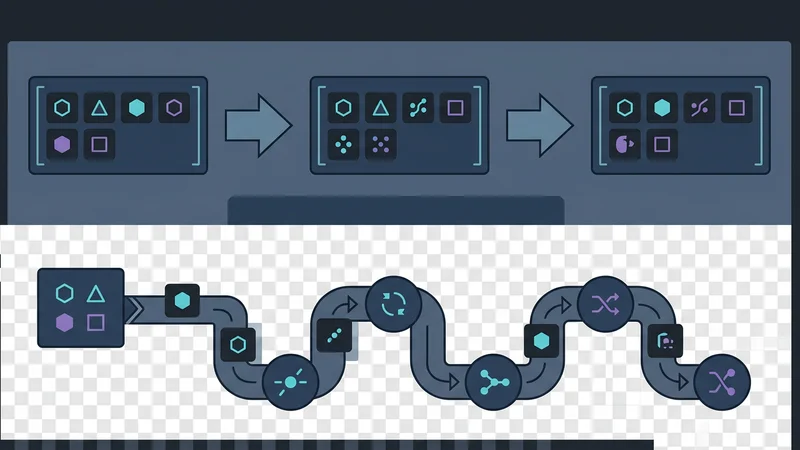
Iterator-Helper ermöglichen Lazy Evaluation (verzögerte Auswertung). Operationen werden erst ausgeführt, wenn die Werte tatsächlich konsumiert werden (z. B. in einer for...of-Schleife oder durch Aufruf von .next()).
// Eine hypothetische massive Datenquelle
const dataSource = Iterator.from(largeLogs);

const processedData = dataSource
  .map(log => JSON.parse(log))
  .filter(log => log.level === 'error')
  .take(5); // Verarbeitet nur so lange, bis 5 Fehler gefunden wurden

// Bisher ist noch nichts passiert. Die Arbeit beginnt erst hier:
for (const error of processedData) {
  console.log(error.message);
}
Durch die Verwendung von .take(n) und .drop(n) können Sie unendliche Streams oder massive Datensätze verarbeiten, ohne ein OutOfMemory-Risiko einzugehen. Dies bringt JavaScript näher an die funktionalen Fähigkeiten von Sprachen wie Rust oder Python.
Härtung der Runtime: Sicherheit und standardisierte Logik
Da JavaScript-Anwendungen immer komplexer werden, wächst die Angriffsfläche für Bugs und Sicherheitslücken. ES2025 führt mehrere Utilities ein, die darauf ausgelegt sind, Muster für „defensives Programmieren“ zu standardisieren.
RegExp.escape(): Injection-Schwachstellen verhindern
Eine der häufigsten Sicherheitslücken in Webanwendungen ist die „Regex Injection“. Dies geschieht, wenn ein Entwickler rohen Benutzereingaben direkt an einen new RegExp()-Konstruktor übergibt. Wenn der Benutzer Sonderzeichen wie *, + oder ( eingibt, kann die Regex-Engine abstürzen oder für ReDoS-Angriffe (Regular Expression Denial of Service) manipuliert werden.
Die neue statische Methode RegExp.escape() löst dies, indem sie jedes Zeichen, das in einem regulären Ausdruck eine besondere Bedeutung hat, sicher escaped.
const userInput = "user.name[0]*";
// Alter Weg: Manueller, fehleranfälliger Regex-Ersatz
// Neuer Weg:
const safeRegex = new RegExp(RegExp.escape(userInput), 'g');
console.log(safeRegex); // /user\.name\[0\]\*/g
Standardisierung von Async-Logik mit Promise.try()
Die Fehlerbehandlung in Funktionen, die entweder synchron oder asynchron sein könnten, war historisch gesehen mühsam. Oft endete man mit verschachtelten try/catch-Blöcken oder redundanten Promise.resolve()-Aufrufen.
Promise.try() bietet einen einheitlichen Wrapper. Es führt eine Funktion aus und stellt sicher, dass das Ergebnis immer ein Promise ist. Wenn die Funktion einen synchronen Fehler wirft, fängt Promise.try() diesen ab und gibt ein abgelehntes Promise zurück, sodass Sie alles in einer einzigen .catch()-Kette behandeln können.
const result = await Promise.try(() => {
  // Dies könnte ein synchroner Throw oder ein asynchrones Rejection sein
  return performRiskyOperation(input);
})
.catch(err => {
  // Alle Fehler landen hier, unabhängig von ihrer Quelle
  console.error("Standardisierter Fehler:", err);
});
Dies ist besonders nützlich in Middleware-Mustern und der Library-Entwicklung, wo man die „Asynchronität“ eines vom Benutzer bereitgestellten Callbacks nicht garantieren kann.
Spezialisierte Performance: Float16Array und Import-Attribute
Modernes JavaScript dient nicht mehr nur der DOM-Manipulation. Mit dem Aufstieg von WebGPU, maschinellem Lernen im Browser und Hochleistungs-Visualisierungen ist das Speichermanagement kritischer denn je.
Float16Array: Halbe Präzision für WebGL und KI
Das neue Float16Array TypedArray schließt eine wichtige Lücke zwischen Uint8Array und Float32Array. In der Grafikprogrammierung und beim maschinellen Lernen ist eine 32-Bit-Präzision für Dinge wie Texturkoordinaten oder Gewichte neuronaler Netze oft übertrieben.
Durch die Verwendung von 16-Bit-Floats mit halber Präzision können Entwickler:
- Speicherverbrauch reduzieren: Den Speicherbedarf großer Datensätze um 50 % senken.
- Bandbreite verbessern: Daten via WebGPU doppelt so schnell an die GPU übertragen.
- KI-Modelle optimieren: Viele LLMs und Bildgenerierungsmodelle verwenden intern FP16; dies ermöglicht eine native Verarbeitung im Browser.
JSON-Module und Import-Attribute
Die Zeiten von assert { type: "json" } sind vorbei. ES2025 standardisiert Import-Attribute unter Verwendung des Schlüsselworts with. Dies ermöglicht das native Importieren von JSON-Dateien und anderen Nicht-JavaScript-Ressourcen auf eine Weise, die sicher und kompatibel mit modernen Browsern und Runtimes ist.
import config from "./config.json" with { type: "json" };

console.log(config.apiEndpoint);
Diese Syntax ist robuster als die vorherigen „Assertions“, da sie der Engine mitteilt, wie das Modul zu interpretieren ist, bevor es abgerufen wird. Dies verhindert „MIME-Type-Confusion“-Angriffe, bei denen ein Server versuchen könnte, einen Browser dazu zu verleiten, eine JSON-Datei als JavaScript auszuführen.

Navigation durch die „Stage 3“-Konfusion
Eine der größten Herausforderungen für Technical Leads im Jahr 2025 ist die Unterscheidung zwischen dem, was „Offizielles ES2025“ ist, und dem, was „Populäres Stage 3“ ist. Da der TC39-Prozess öffentlich ist, erfahren viele Features einen großen Hype, bevor sie tatsächlich finalisiert sind.
Die Temporal API: Noch nicht ganz so weit
Die Temporal API ist das am sehnlichsten erwartete Feature in der Geschichte von JavaScript, entwickelt, um das fehlerhafte Date-Objekt zu ersetzen. Obwohl es sich in Stage 3 befindet und in vielen Umgebungen via Polyfills verfügbar ist, ist es kein Teil der offiziellen ES2025-Spezifikation.
- Status: Stage 3 (Finalisierung der Implementierungen).
- Empfehlung: Nutzen Sie vorerst weiterhin
date-fnsoder denTemporal-Polyfill. Verlassen Sie sich nicht ohne Fallback auf nativen Support in älteren Browsern oder LTS-Versionen von Node.js.
Pipeline Operator und Pattern Matching
Ähnlich verhält es sich mit dem Pipeline Operator (|>) und Pattern Matching (match), die sich noch in der Verfeinerung befinden.
- Pipeline Operator: Vereinfacht verschachtelte Funktionsaufrufe wie
f(g(h(x)))zux |> h |> g |> f. Er ist hinsichtlich seiner Syntax immer noch stark umstritten und nicht in ES2025 enthalten. - Pattern Matching: Eine leistungsstarke Methode zur Handhabung komplexer Verzweigungslogik (ähnlich wie in Rust oder Elixir). Obwohl es gute Fortschritte macht, ist es für zukünftige Iterationen (ES2026+) geplant.
Das Ökosystem 2025-2026: Tools und Runtimes
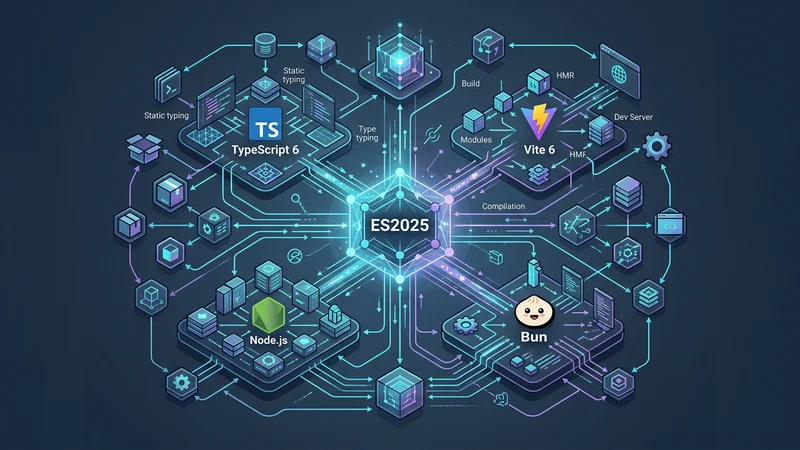
Um ES2025-Features heute nutzen zu können, muss Ihre Toolchain auf dem neuesten Stand sein. Das Ökosystem hat sich schnell bewegt, um diese „ergonomischen“ Verbesserungen zu unterstützen.
Runtimes: Node.js, Bun und Deno
- Node.js 22/23: Diese Versionen enthalten bereits experimentellen oder stabilen Support für Iterator-Helper und
Promise.try. - Bun 1.2+: Bun war führend bei der frühen Implementierung von ES2025-Features und lieferte sie oft schon Wochen nach Erreichen von Stage 4 aus.
- Browser: Chrome 125+, Firefox 128+ und Safari 17.4+ unterstützen bereits den Großteil der neuen Set-Methoden und Iterator-Helper.
Compiler und Frameworks
- TypeScript 6.x: Dies ist die Baseline für 2025. Es bietet volle Typsicherheit für die neuen Set-Methoden und verarbeitet die
with-Syntax für Import-Attribute korrekt. - Vite 6: Als dominierendes Build-Tool ist Vite 6 für natives ESM optimiert und übernimmt die Transformation der ES2025-Syntax für ältere Browser mit minimalem Overhead.
- React Compiler: Obwohl nicht strikt Teil von ECMAScript, arbeitet der React Compiler (veröffentlicht zusammen mit React 19) Hand in Hand mit ES2025-Features, um Performance-Optimierungen zu automatisieren, die zuvor manuelle
useMemo-Hooks erforderten.
Häufig gestellte Fragen (FAQ)
Was sind die wichtigsten Features von ES2025?
Zu den Hauptmerkmalen gehören Iterator-Helper (Lazy-Evaluation-Methoden wie .map und .filter), native Set-Operationen (Union, Intersection etc.) und RegExp.escape(). Außerdem werden Promise.try() für eine bessere Fehlerbehandlung und Float16Array für speichereffiziente Datenverarbeitung eingeführt.
Wann wird ES2025 offiziell veröffentlicht?
Die ECMAScript 2025 Spezifikation wurde offiziell von der Ecma General Assembly im Juni 2025 verabschiedet. Die meisten modernen Browser und Runtimes (wie Node.js und Bun) begannen bereits Ende 2024 und Anfang 2025 mit der Implementierung dieser Funktionen, sobald sie Stage 4 erreichten.
Wie unterscheidet sich die Temporal API vom Date-Objekt?
Die Temporal API ist ein moderner Ersatz für Date, der Zeitzonen, Sommerzeit-Umstellungen und Kalendersysteme standardmäßig korrekt handhabt. Im Gegensatz zum mutierbaren und oft verwirrenden Date-Objekt bietet Temporal unveränderliche (immutable) Objekte und eine viel klarere API für Datumsarithmetik.
Wird der Pipeline Operator in modernen Browsern unterstützt?
Nein, der Pipeline Operator (|>) befindet sich derzeit in Stage 3 des TC39-Prozesses und ist nicht Teil des ES2025-Standards. Um ihn heute zu verwenden, müssen Sie ein Babel-Plugin nutzen, um die Syntax in standardmäßige JavaScript-Funktionsaufrufe zu transpilieren.
Was ist der Vorteil von Record und Tuple in JavaScript?
Record und Tuple (derzeit in Stage 3) bieten tiefgehend unveränderliche Datenstrukturen, die nach Wert und nicht nach Referenz verglichen werden. Dies würde schnellere Vergleiche in Frameworks wie React ermöglichen und versehentliche Statusänderungen in komplexen Anwendungen verhindern.
Fazit: Ein reiferes JavaScript
ES2025 repräsentiert die „Politur-Phase“ von JavaScript. Durch die Aufnahme von Funktionen, die zuvor Domäne von Drittanbieter-Bibliotheken waren, wird die Sprache eigenständiger. Die Ergänzung von Iterator-Helpern und Set-Methoden reduziert den Bedarf an Utility-Libraries erheblich, während RegExp.escape() und Promise.try() Sicherheit und Robustheit direkt in die Runtime integrieren.
Für Entwickler ist die Botschaft klar: Der Fokus hat sich in Richtung Performance und Codequalität verschoben. Durch die Nutzung von Lazy Evaluation, Half-Precision-Arrays und standardisierten Import-Attributen können wir Webanwendungen bauen, die nicht nur leistungsstärker, sondern auch effizienter im Umgang mit Systemressourcen sind. Wenn Sie Ihre Projekte auf TypeScript 6 und Vite 6 aktualisieren, beginnen Sie damit, Ihren Code auf manuelle Set-Logik und Eager-Array-Transformationen zu prüfen – ES2025 bietet einen besseren Weg nach vorne.