
Le paysage de l'ingénierie logicielle a connu un changement sismique. Si 2023 était l'année du « Chatbot » et 2024 celle des « Copilots », alors 2025 et 2026 sont officiellement devenues l'ère du développeur agentique.
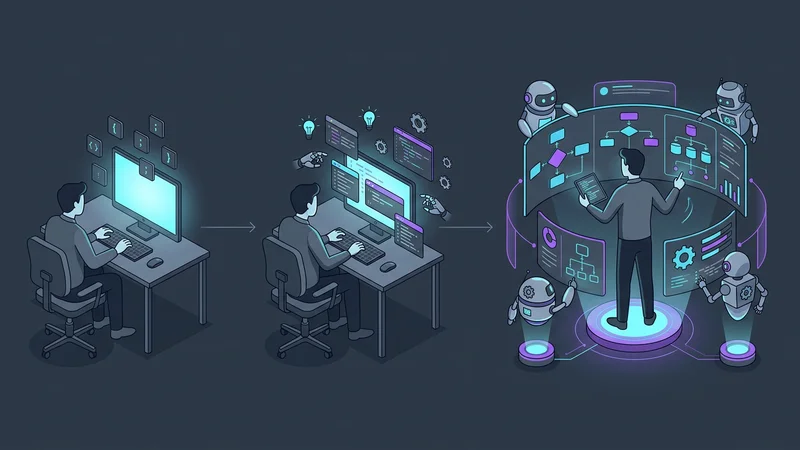
Nous ne demandons plus simplement à une IA de « écrire une fonction qui trie un tableau ». Au lieu de cela, nous dirigeons des agents autonomes pour « migrer cette API Express.js héritée vers une architecture Next.js serverless, en s'assurant que tous les tests unitaires passent et que la documentation est mise à jour ». Cette transition de la simple autocomplétion à l'orchestration agentique représente le changement le plus significatif dans le workflow des développeurs depuis l'invention de l'environnement de développement intégré (IDE).
Dans ce guide, nous explorerons les concepts fondamentaux, les techniques modernes et l'outillage de l'ère 2026 qui définissent la génération de code propulsée par l'IA.
Qu'est-ce que la génération de code par IA ?
À la base, la génération de code par IA est l'utilisation de grands modèles de langage (LLMs) pour transformer une intention en langage naturel en code exécutable. Cependant, la définition s'est élargie. En 2026, il ne s'agit plus seulement de génération de texte ; il s'agit de raisonnement contextuel.
La génération de code par IA moderne implique une approche « Système 2 », où les modèles « réfléchissent » avant de taper. Ils analysent l'ensemble du dépôt (repository), comprennent les interdépendances entre les modules et simulent l'exécution du code pour identifier les erreurs potentielles avant même que le développeur ne voie le résultat.
De l'autocomplétion à l'orchestration agentique
L'industrie a dépassé le stade du « Ghostwriting » (écriture fantôme) — ces suggestions en gris qui apparaissent pendant la saisie. Bien qu'utile, le ghostwriting est réactif. Le nouveau standard est l'orchestration agentique, où les développeurs gèrent une flotte d'agents IA.
Ces agents ne se contentent pas d'écrire du code ; ils :
- Planifient : Décomposent une requête de haut niveau en une séquence d'étapes techniques.
- Exécutent : Écrivent le code sur plusieurs fichiers.
- Accèdent au terminal : Lancent des commandes de build et interprètent les erreurs du compilateur.
- S'auto-corrigent : Utilisent les retours des erreurs du linter ou des échecs de tests pour affiner l'implémentation de manière autonome.
L'essor du « Vibe Coding »
Un terme qui a gagné énormément de terrain fin 2025 est le « Vibe Coding ». Il décrit un style de développement de haut niveau, piloté par l'intention, où l'interface principale est le langage naturel. Dans ce modèle, le développeur se concentre sur la « vibe » — l'expérience utilisateur, les contraintes architecturales et la logique métier — tandis que l'IA gère la « syntaxe », le boilerplate et les détails d'intégration sur l'ensemble de la stack.
Comment fonctionne la génération de code par IA : la stack technique 2026
Pour comprendre pourquoi les outils modernes sont tellement plus efficaces que leurs prédécesseurs, nous devons examiner les technologies sous-jacentes : RAG 2.0, le raisonnement Système 2 et les nouveaux protocoles d'interopérabilité.
RAG 2.0 et récupération hybride
Les premiers assistants IA étaient limités par les « fenêtres de contexte » — la quantité de code qu'ils pouvaient « voir » en une fois. Le RAG 2.0 (Retrieval-Augmented Generation) a résolu ce problème grâce à la récupération hybride.
Au lieu de simplement regarder le fichier ouvert, les IDE modernes comme Cursor et Windsurf utilisent une combinaison de :
- Recherche vectorielle sémantique : Trouver du code basé sur le sens (ex: « Où se trouve la logique d'authentification ? »).
- Recherche par mots-clés BM25 : Trouver des noms de variables spécifiques ou des chaînes de caractères uniques.
- Contexte basé sur les graphes : Comprendre comment une classe
Userdans un fichier est liée à un schémaDatabasedans un autre.
Cela permet à l'IA de fournir des suggestions qui ne sont pas seulement syntaxiquement correctes, mais architecturalement cohérentes avec votre projet spécifique.
Raisonnement Système 2 : le mode « Pensée étendue »
Des modèles comme Claude 4.5 Sonnet et GPT-5.3-Codex utilisent désormais la « Pensée étendue » (Extended Thinking). Lorsque vous donnez un prompt complexe, le modèle ne répond pas instantanément. Il entre dans un état de « réflexion », où il crée un brouillon interne pour peser différents choix architecturaux. Cela réduit considérablement les erreurs logiques dans les algorithmes complexes et garantit que l'IA ne fournit pas seulement le mot suivant le plus probable, mais la solution la plus logique.
MCP et ACP : les nouveaux standards
Deux protocoles ont révolutionné la manière dont les agents IA interagissent avec nos outils :
- MCP (Model Context Protocol) : Introduit par Anthropic, il permet à un modèle IA de se connecter directement à des outils externes comme Slack, Google Drive ou votre terminal local sans avoir besoin de code d'intégration personnalisé.
- ACP (Agent Client Protocol) : Un standard de 2026 qui permet à un seul agent IA de travailler sur différents IDE. Vous pouvez commencer une tâche dans VS Code et laisser un agent « Zed » la reprendre de manière fluide car ils partagent une interface de communication unifiée.
Cas d'utilisation pratiques et exemples concrets
La puissance de la génération de code par IA se voit mieux en action. Voici trois façons principales dont les équipes utilisent ces outils en 2026.
1. Pipelines Design-to-Code
L'écart entre le design et le développement a pratiquement disparu. Avec des outils comme Pencil.dev ou Lovable, les développeurs peuvent fournir un lien Figma ou même une capture d'écran d'un dessin sur tableau blanc à un agent.
Exemple de scénario : Un développeur télécharge une capture d'écran d'un tableau de bord. L'agent IA :
- Identifie les composants UI (cartes, graphiques, barres latérales).
- Génère une base de code React/Next.js responsive en utilisant Tailwind CSS.
- S'assure que l'accessibilité (labels ARIA) est intégrée dès le départ.
// Composant React généré par IA à partir d'une description de capture d'écran
import React from 'react';
import { Card, LineChart, Metric } from '@/components/ui';

interface DashboardProps {
  data: Array<{ date: string; value: number }>;
}

/**
 * @agent_note Généré via l'intention "Vibe Coding".
 * L'implémentation utilise Shadcn UI et Tailwind pour la réactivité.
 */
export const AnalyticsDashboard: React.FC<DashboardProps> = ({ data }) => {
  return (
    <div className="grid grid-cols-1 md:grid-cols-3 gap-6 p-8">
      <Card className="p-4 shadow-sm hover:shadow-md transition-shadow">
        <Metric label="Total Revenue" value="$45,231" delta="+12%" />
        <LineChart data={data} className="mt-4 h-32" />
      </Card>
      {/* Autres composants générés... */}
    </div>
  );
};
2. Modernisation de l'existant (Legacy)
En 2025, AWS a utilisé des agents IA pour moderniser 40 millions de lignes de COBOL pour Toyota. Aujourd'hui, c'est une pratique courante pour les entreprises de taille moyenne. Les agents peuvent parcourir un monolithe Java de 15 ans, cartographier les dépendances et suggérer un refactoring basé sur des microservices, en écrivant les Dockerfiles et les manifestes Kubernetes au passage.
3. Infrastructure autonome (Agents SRE)
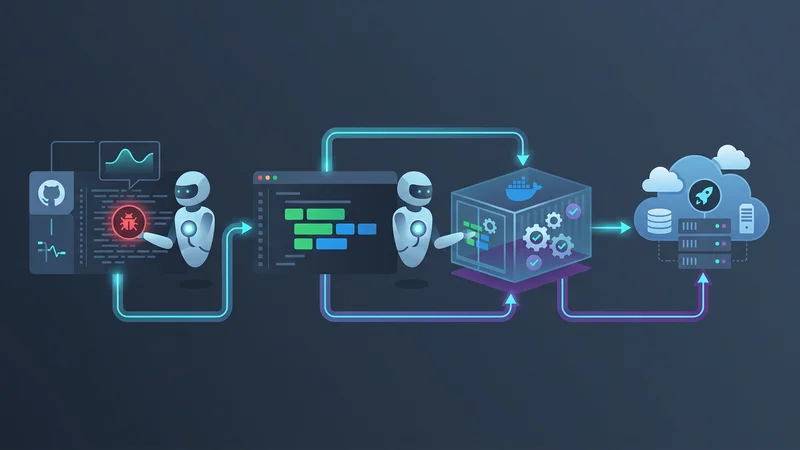
Le Site Reliability Engineering a été transformé par des agents « auto-guérisseurs ». Lorsqu'un goulot d'étranglement en production est détecté par les outils de monitoring, un agent IA peut :
- Analyser les logs pour trouver la cause racine (ex: un index de base de données manquant).
- Écrire un script de migration pour ajouter l'index.
- Exécuter la migration dans un environnement de staging.
- Soumettre une Pull Request pour approbation humaine ou, dans des environnements de haute confiance, déployer le correctif automatiquement.
Pièges courants et comment les éviter
Bien que les gains de productivité soient immenses, la génération par IA introduit de nouveaux risques que les développeurs seniors doivent gérer.
« Workslop » et dette technique
Le code généré par IA semble souvent impeccable mais peut contenir du « workslop » — des vérifications redondantes, des boucles inefficaces ou des fonctionnalités de bibliothèque « hallucinées » qui n'existent pas réellement.
- Atténuation : Imposez des Quality Gates strictes. Utilisez des linters propulsés par l'IA comme SonarQube AI, spécifiquement entraînés pour repérer les schémas d'IA « bâclés ».
L'écart de sécurité de 62 %
Une étude de 2025 a révélé qu'environ 62 % des programmes générés par IA contiennent au moins une vulnérabilité exploitable, comme un dépassement de tampon ou un flux d'authentification non sécurisé.
- Atténuation : Ne faites jamais confiance à l'IA pour la logique critique de sécurité (Auth, Chiffrement, Assainissement) sans une revue humaine. Passez toujours le code généré par des outils SAST (Static Application Security Testing) comme Snyk.
Érosion des compétences
À mesure que nous passons à un modèle « Review-First » (révision d'abord), il existe un risque que les développeurs juniors n'apprennent jamais le « pourquoi » derrière le code.
- Atténuation : Mettez en œuvre des journées de développement « sans IA » ou des sessions « Deep Dive » où l'équipe refactorise manuellement un morceau de code généré par IA pour comprendre ses rouages internes.
Meilleurs outils de génération de code par IA (Standards 2026)
Le marché s'est consolidé autour de quelques outils de pointe qui définissent le standard actuel.
| Catégorie | Outils leaders | Caractéristiques clés |
|---|---|---|
| IDE Agentiques | Windsurf (par Cognition) | Propose le mode « Cascade » ; permet à l'IA d'agir comme un collaborateur complet avec accès au terminal. |
| Cursor | La référence pour l'indexation de base de code ; intégration native avec Claude 4.5. | |
| Zed | Un éditeur haute performance basé sur Rust qui privilégie la vitesse et les agents compatibles ACP. | |
| Modèles de pointe | GPT-5.3-Codex | Fenêtre de contexte massive de 400k ; hautement optimisé pour les workflows natifs agentiques. |
| Claude 4.5 Sonnet | Meilleur raisonnement de sa catégorie ; propose « Computer Use » pour piloter le bureau du développeur pour les tests. | |
| Agents CLI | Claude Code | Un agent basé sur le terminal capable de gérer des refactorings complexes en plusieurs étapes via CLI. |
Meilleures pratiques pour le Prompt Engineering en 2026
Les prompts ne sont plus des textes jetables ; ce sont des actifs de code. Les équipes modernes utilisent des fichiers .clauderules ou .windsurfrules à la racine de leur dépôt pour définir les standards spécifiques au projet.
{
  "project_standards": {
    "framework": "Next.js 16",
    "styling": "Tailwind",
    "patterns": ["Repository Pattern", "Dependency Injection"],
    "forbidden_libraries": ["axios", "moment"]
  },
  "agent_instructions": "Toujours inclure des tests unitaires Vitest pour chaque nouvelle fonction utilitaire. Ne pas modifier /config/secrets.ts."
}
Foire aux questions
Quels sont les avantages d'utiliser des générateurs de code par IA ?
Les générateurs de code par IA accélèrent considérablement le développement en automatisant le boilerplate répétitif, en suggérant des solutions algorithmiques complexes et en permettant un prototypage rapide. Ils permettent aux développeurs de se concentrer sur l'architecture de haut niveau et la logique métier plutôt que sur la syntaxe mondaine.
Quel est l'impact des générateurs de code par IA sur la productivité des développeurs ?
La productivité se déplace de « l'écriture » vers la « révision ». Les développeurs peuvent souvent accomplir des tâches 3 à 5 fois plus vite, mais ils doivent passer environ 70 % de leur temps à agir en tant qu'éditeur ou architecte, s'assurant que la sortie de l'IA respecte les standards de qualité et de sécurité.
L'IA peut-elle remplacer les développeurs de logiciels humains ?
Non, l'IA est un multiplicateur de force, pas un remplacement. Bien qu'elle puisse gérer les détails d'implémentation, les humains sont toujours nécessaires pour la conception de systèmes de haut niveau, la compréhension des exigences métier complexes et la prise de décisions éthiques ou liées à la sécurité que les modèles ne peuvent pas encore naviguer.
Quels sont les risques d'utiliser du code généré par IA ?
Les principaux risques incluent l'introduction de vulnérabilités de sécurité, la création de « dette technique » via un code inefficace et le potentiel d'hallucinations où l'IA suggère des APIs inexistantes. Il y a aussi un risque d'érosion des compétences si les développeurs s'appuient trop lourdement sur l'outil.
Quel outil d'IA est le meilleur pour le code ?
En 2026, Windsurf et Cursor sont les IDE agentiques les mieux notés en raison de leur indexation profonde de la base de code et de leur capacité à exécuter des commandes terminal de manière autonome. Pour le modèle sous-jacent, Claude 4.5 Sonnet est largement considéré comme le leader pour le raisonnement logique et la précision du code.
Conclusion
L'introduction de la génération de code par IA a fondamentalement changé ce que signifie être un « ingénieur logiciel ». En 2026, les développeurs les plus performants sont ceux qui maîtrisent l'art de l'orchestration agentique. Ils ne sont plus seulement des dactylos ; ils sont les chefs d'un orchestre numérique, dirigeant des agents IA pour construire des systèmes complexes et évolutifs avec une vitesse sans précédent.
Cependant, un grand pouvoir implique la responsabilité d'une révision rigoureuse. Alors que nous nous tournons vers le « Vibe Coding » et les interfaces en langage naturel, nos rôles de gardiens de la qualité du code, de la sécurité et de l'intégrité architecturale n'ont jamais été aussi critiques. L'avenir du développement est collaboratif — un partenariat fluide entre la créativité humaine et l'intelligence artificielle.