
Introduktion
Landskapet för backend-utveckling har genomgått ett tektoniskt skifte under de senaste två åren. I nästan ett decennium var Express 4.x branschstandard, vilket krävde att utvecklare förlitade sig på tredjepartsbibliotek för grundläggande uppgifter som att hantera asynkrona fel eller göra HTTP-anrop. Men i och med lanseringen av Express 5.0 och Node.js 22/23 LTS har ekosystemet mognat till en mer strömlinjeformad, högpresterande och säker miljö.
Att bygga ett REST API under 2025 handlar inte längre bara om routing; det handlar om typsäkerhet, contract-first-design och att utnyttja inbyggda runtime-funktioner som tidigare inte var tillgängliga. Denna guide utforskar hur man bygger professionella REST API:er med de senaste funktionerna i Node.js och Express, från grundläggande konfiguration till avancerade arkitekturmönster.
Den moderna grunden: Node.js 22 och Express 5.0
Innan vi skriver en enda rad kod är det viktigt att förstå den moderna miljön. Node.js 22 har introducerat funktioner som avsevärt minskar behovet av externa beroenden.
Anamma ES-moduler (ESM)
CommonJS (require) är i praktiken ett föråldrat format i det moderna Node.js-ekosystemet. Genom att ställa in "type": "module" i din package.json får du tillgång till top-level await och bättre statisk analys för byggverktyg.
{
  "name": "modern-express-api",
  "version": "1.0.0",
  "type": "module",
  "dependencies": {
    "express": "^5.0.0",
    "zod": "^3.23.0"
  }
}
Express 5.0: Inbyggt asynkront stöd
Den mest betydelsefulla uppdateringen i Express 5.0 är den inbyggda hanteringen av Promises. I Express 4 skulle en unhandled rejection i en async route leda till att anropet hängde sig eller att processen kraschade, om den inte var omsluten av ett try-catch-block eller en hjälpfunktion som express-async-handler. Express 5.0 fångar automatiskt dessa fel och skickar dem vidare till din globala middleware för felhantering.
Native Fetch och WebSockets
Node.js 22 stabiliserar det inbyggda fetch API:et. Detta innebär att ditt REST API nu kan kommunicera med andra mikrotjänster utan overhead från axios eller node-fetch. Dessutom ger inkluderingen av node:ws en inbyggd väg för att lägga till realtidsfunktionalitet till dina REST-endpoints.
Arkitektonisk excellens: Trelagersmönstret
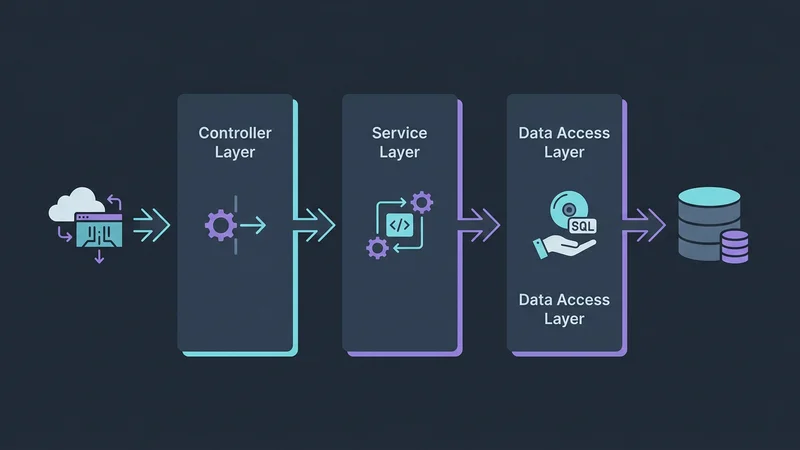
Ett vanligt misstag i Express-utveckling är "Fat Controller"-syndromet, där all affärslogik, databasfrågor och validering ligger i själva route-hanteraren. För att bygga ett skalbart API implementerar vi en modulär trelagersarkitektur.
1. Controller-lagret
Controllerns enda ansvar är att hantera HTTP-gränssnittet. Den tolkar anropet, anropar rätt tjänst och returnerar ett formaterat svar. Den ska aldrig interagera direkt med databasen.
2. Service-lagret
Detta är hjärtat i din applikation. Service-lagret innehåller den centrala affärslogiken. Om du behöver beräkna en rabatt, skicka ett e-postmeddelande eller kontrollera en användares behörighet, sker det här. Detta lager är ramverksoberoende, vilket gör det enkelt att testa eller flytta till ett annat ramverk senare.
3. Data Access Layer (DAL)
DAL interagerar med din databas. Genom att använda en ORM som Prisma eller en ODM som Mongoose abstraherar detta lager dina queries. Genom att isolera dataåtkomsten kan du byta från PostgreSQL till MongoDB med minimal påverkan på din affärslogik.
Implementera CRUD med typsäkerhet och validering
Under 2025 är det en kritisk säkerhetsrisk att lita på klientindata. Vi använder Zod för runtime-validering och TypeScript för säkerhet under kompilering.
Definiera schemat
Zod låter dig definiera ett schema som validerar req.body och samtidigt genererar en TypeScript-typ.
import { z } from 'zod';

export const CreateUserSchema = z.object({
  email: z.string().email(),
  password: z.string().min(8),
  role: z.enum(['USER', 'ADMIN']).default('USER'),
});

type CreateUserDto = z.infer<typeof CreateUserSchema>;
Route-hanteraren i Express 5.0
Notera hur ren routen blir när vi utnyttjar Express 5.0:s inbyggda promise-hantering och en centraliserad middleware för validering.
import express from 'express';
import { userService } from '../services/user.service.js';
import { validate } from '../middleware/validate.js';
import { CreateUserSchema } from '../schemas/user.schema.js';

const router = express.Router();

router.post('/', validate(CreateUserSchema), async (req, res) => {
  // Logiken körs endast om valideringen lyckas
  const newUser = await userService.createUser(req.body);
  res.status(201).json(newUser);
});

export default router;
Centraliserad felhantering
Istället för utspridda res.status(500)-anrop använder vi en global felhanterare. Express 5.0 gör detta mer kraftfullt genom att automatiskt fånga upp fel som kastas från asynkrona funktioner.
// middleware/errorHandler.js
export const errorHandler = (err, req, res, next) => {
  const statusCode = err.statusCode || 500;
  const message = err.message || 'Internt serverfel';

  console.error(`[Fel] ${req.method} ${req.url}:`, err);

  res.status(statusCode).json({
    status: 'error',
    code: err.code || 'INTERNAL_ERROR',
    message,
    ...(process.env.NODE_ENV === 'development' && { stack: err.stack })
  });
};
Avancerade tekniker: Säkerhet och prestanda
Ett produktionsredo API kräver mer än bara CRUD-operationer. Det kräver en robust säkerhetsprofil och en förståelse för Node.js event loop.
Node.js Permission Model
Ett av de mest spännande tillskotten i Node.js 22 är den experimentella rättighetsmodellen (permission model). Du kan nu begränsa ditt API:s åtkomst till miljön. Till exempel:
node --experimental-permission --allow-fs-read=/tmp/ --allow-net=api.stripe.com server.js
Detta säkerställer att även om ett beroende komprometteras, kan angriparen inte läsa din /etc/passwd-fil eller skicka data till en skadlig domän.
Hantering av tunga beräkningar
Node.js är enkeltrådat. Om ditt API behöver bearbeta stora bilder eller generera komplexa PDF-filer kommer det att blockera event loopen, vilket förhindrar att andra anrop hanteras.
- Lösning: Använd Worker Threads för CPU-intensiva uppgifter eller flytta ut dem till en bakgrundsarbetare som BullMQ med hjälp av Redis. Detta håller ditt REST API responsivt.
Säkerhetsheaders och sanering
Använd alltid Helmet.js för att ställa in säkra HTTP-headers. Det skyddar mot vanliga sårbarheter som Cross-Site Scripting (XSS) och clickjacking som standard.
import helmet from 'helmet';
const app = express();
app.use(helmet()); // Ställer in 15+ säkerhetsheaders
Verkligt scenario: Implementera avancerad filtrering
Moderna API:er behöver ofta stödja komplexa sökfrågor. Istället för att skriva anpassad logik för varje route kan vi bygga ett återanvändbart verktyg för "Query Features".
class APIFeatures {
  constructor(query, queryString) {
    this.query = query; // Prisma- eller Mongoose-queryn
    this.queryString = queryString; // req.query
  }

  filter() {
    const queryObj = { ...this.queryString };
    const excludedFields = ['page', 'sort', 'limit', 'fields'];
    excludedFields.forEach(el => delete queryObj[el]);

    // Avancerad filtrering (t.ex. price[gte]=500)
    let queryStr = JSON.stringify(queryObj);
    queryStr = queryStr.replace(/\b(gte|gt|lte|lt)\b/g, match => `$${match}`);

    this.query = this.query.find(JSON.parse(queryStr));
    return this;
  }

  paginate() {
    const page = this.queryString.page * 1 || 1;
    const limit = this.queryString.limit * 1 || 100;
    const skip = (page - 1) * limit;
    this.query = this.query.skip(skip).limit(limit);
    return this;
  }
}
Detta gör att du kan hantera anrop som GET /api/products?price[gte]=100&page=2&limit=20 med bara några få rader kod i ditt service-lager.
Viktiga verktyg för 2025
| Verktyg | Syfte | Varför det är viktigt |
|---|---|---|
| Prisma | ORM | Ger fullständig typsäkerhet för ditt databasschema. |
| PM2 | Processhantering | Hanterar klustring för att utnyttja alla CPU-kärnor och säkerställer omstarter utan driftstopp. |
| Swagger UI | Dokumentation | Genererar automatiskt interaktiv API-dokumentation från din OpenAPI 3.1-specifikation. |
| Winston | Loggning | Strukturerad JSON-loggning krävs för moderna övervakningsverktyg som Datadog. |
Vanliga frågor
Hur bygger jag ett RESTful API med Node.js och Express från grunden?
För att bygga ett API från grunden, initiera ett Node.js-projekt med npm init, installera Express och skapa en startfil. Definiera sedan rutter med app.get(), app.post(), etc., och använd middleware för att tolka JSON och hantera fel.
Vad är skillnaden mellan Node.js och Express.js i API-utveckling?
Node.js är JavaScript-runtime-miljön som gör att du kan köra kod på servern, medan Express.js är ett minimalt webbramverk byggt ovanpå Node.js. Node.js tillhandahåller de grundläggande nätverksfunktionerna, medan Express förenklar routing, middleware-integration och hantering av anrop.
Hur hanterar man autentisering och auktorisering i ett Node.js REST API?
Autentisering hanteras vanligtvis med JSON Web Tokens (JWT) eller sessionscookies via middleware som Passport.js eller anpassad logik. Auktorisering implementeras genom att kontrollera användarens roll eller rättigheter (extraherade från token) mot kraven för den specifika rutten.
Vilka är de bästa metoderna för att strukturera ett Node.js Express-projekt?
En rekommenderad struktur använder en lagrad arkitektur som separerar kod i mappar för Controllers, Services, Models (DAL) och Middleware. Denna ansvarsuppdelning säkerställer att affärslogiken är isolerad från HTTP-transportlagret, vilket gör koden lättare att testa och underhålla.
Hur ansluter man ett Node.js REST API till en MongoDB-databas?
Du ansluter till MongoDB med den officiella MongoDB-drivern eller en ODM som Mongoose. Du upprättar en anslutningssträng i dina miljövariabler och använder ett singleton-mönster för att säkerställa att databasanslutningen delas över hela applikationens service-lager.
Slutsats
Att bygga REST API:er med Node.js och Express har mognat till en sofistikerad disciplin. Lanseringen av Express 5.0 markerar en vändpunkt där asynkrona mönster äntligen är förstklassiga medborgare, vilket avsevärt minskar boilerplate och felbenägen kod. Genom att kombinera detta med Node.js 22:s inbyggda funktioner – som rättighetsmodellen och fetch API – och en strikt trelagersarkitektur, kan utvecklare bygga system som inte bara är högpresterande utan också motståndskraftiga och säkra.
När du går vidare, prioritera contract-first-design med OpenAPI och runtime-validering med Zod. Dessa verktyg säkerställer att ditt API förblir ett pålitligt kontrakt för din frontend och dina mobilanvändare när det växer. "Express-sättet" under 2025 handlar om att göra mer med mindre: färre beroenden, fler inbyggda funktioner och renare, typsäker kod.